01Fractional CTO · ML scientist · Software engineer

I take science from inception to production.

I'm Or Alus, a Ph.D. physicist who spent 13 years building machine learning (ML) and computational systems at the Technion, Rockefeller University and Memorial Sloan Kettering, then shipped my own AI product as a solo technical founder. I help startups and research teams turn ambitious technical ideas into systems that work.

Start a conversation

Or see what I've built.

02Engagements

Three ways to work together

A

Fractional CTO

Senior technical leadership, part-time, before you need it full-time.

For early-stage startups, especially in health tech, that need someone to own the technical direction.

  • Architecture and build-or-buy decisions
  • AI model and vendor selection
  • A roadmap the team can execute
  • Hiring your first engineers
  • Technical due diligence for founders and investors
B

ML & AI projects

Scoped, hands-on, measurable.

Focused engagements that take a model or an AI feature from idea to validated result.

  • Deep learning in PyTorch
  • Large language model (LLM) pipelines and agents
  • Semantic search and retrieval-augmented generation (RAG)
  • Evaluation design and benchmarking
  • Computer vision and signal processing
C

Engineering on your team

An ML scientist or software engineer who ships.

Embedded with your team, on contract or full-time, building systems that run in production.

  • Python data pipelines
  • Postgres and backend services
  • Search and product interfaces
  • Deployment on Cloudflare and Render
  • AI-assisted development with Claude Code

03Use cases

Problems I've worked on, from the lab to the market

LLMs & search

Turning unreliable public records into a product people pay for

The problem
Federal healthcare datasets list clinics, providers and affiliations, but the records are stale and scattered across sources. Sales teams can’t trust them as they are.
The approach
A multi-stage Python pipeline that joins the federal datasets with an LLM-powered web enrichment layer, using semantic search and language-model extraction. Local and hosted models, and four search and extraction APIs, were benchmarked on accuracy, cost and latency before choosing the production stack.
The outcome
A live search product with clinic-level records and usage-based billing.
LLMsSemantic searchPythonPostgres

Deep learning · Medical imaging

Faster body scans without losing diagnostic quality

The problem
Diffusion-weighted magnetic resonance imaging (MRI) is central to cancer imaging, but the scans are long, and shortening them adds noise.
The approach
Denoising and reconstruction networks trained in PyTorch on raw scanner data, extracted from hundreds of patients with pipelines built on the GE HealthCare software development kit. The models were retrained to generalize across anatomies, pulse sequences and scanner vendors.
The outcome
Scan time cut by a factor of four, with image quality evaluated by radiologists in a clinical study (European Journal of Radiology, 2024).
PyTorchDeep learningClinical evaluation

Memorial Sloan Kettering Cancer Center

See the publications

Computer vision · Neuroscience

Understanding smell, the sense we can’t digitize

The problem
Sound and vision can be recorded, transmitted and reproduced digitally. Smell can’t, because we still don’t fully understand how the brain turns a molecule into a smell.
The approach
Computer vision pipelines that process calcium-imaging video of the rodent olfactory bulb, find each region of interest and extract its response to different odors, then compare those responses with the molecular properties of the odors.
The outcome
Linked the molecular properties of odors to olfactory responses, presented at the American Physical Society meeting, 2021.
MATLABPythonComputer visionCalcium imaging

Rockefeller University

GPU computing · Physics

Simulating chaotic systems at scale

The problem
Measuring the long-time statistics of partly chaotic systems takes very large numbers of long trajectories.
The approach
High-performance simulations and solvers in C, OpenCL, CUDA and MATLAB, parallelized across GPUs and CPUs on Linux clusters.
The outcome
Five peer-reviewed papers, a Ph.D. and a fellowship.
CUDACParallel computing

Technion – Israel Institute of Technology

See the publications

05Toolkit

From GPU kernels to billing pages

Machine learning

PyTorch, deep learning, LLMs, semantic search and RAG, natural language processing, computer vision

Data & backend

Python, numpy, pandas, scipy, scikit-learn, SQL, Postgres, Supabase, data pipelines

Product & infrastructure

Next.js, Kotlin and Android, Cloudflare, Vercel, Render, Stripe, git and GitHub, Linux, Claude Code

High-performance computing

CUDA, C, OpenCL, MATLAB, GPU and CPU parallelization

06About

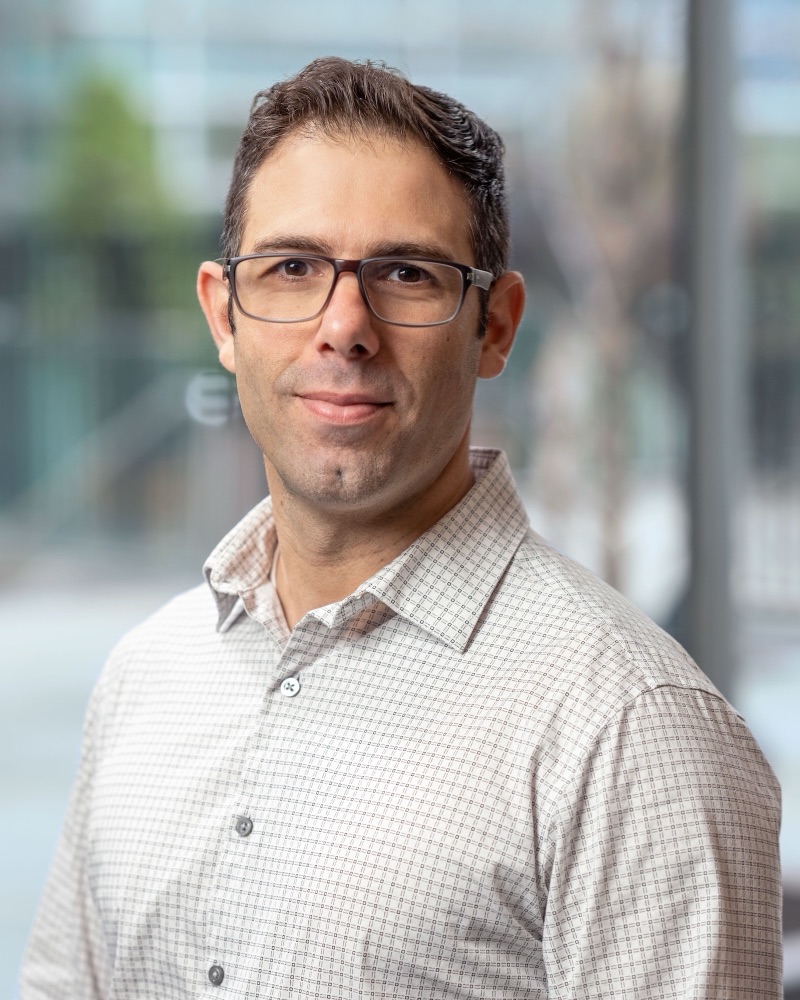
Portrait of Or Alus
Or Alus, New York

From chaos theory to clinical AI

I started in physics. My Ph.D. at the Technion asked how order and chaos coexist in dynamical systems, and answering it meant writing a lot of fast numerical code. That pairing of a hard question and the software to answer it has stayed with me.

At Rockefeller University I applied it to neuroscience. At Memorial Sloan Kettering I applied it to medical imaging, where the deep learning models I built cut scan times by a factor of four and were evaluated by radiologists in a clinical study. In 2025 I founded Narwhalim and built it solo, from user research and data pipelines to billing, with AI as a core part of the workflow.

I'm also an angel investor with Mid-Atlantic Bio Angels, where I help assess the science and technology behind life-science and medical device startups.

Education
Ph.D., Physics, Technion
B.Sc., Materials Engineering and Physics, Technion
M.Sc., Computer Science, Georgia Tech (in progress)
Beyond work
5th-degree black belt in karate, purple belt in Brazilian jiu-jitsu

07Research

Selected publications

Accelerated Free-Breathing 5D Multi-Echo Respiratory Motion-Resolved R2*, PDFF, and QSM Using Novel Composite Total Variation

Mungsoo Kang, Or Alus, Youngwook Kee

Medical Image Computing and Computer Assisted Intervention (MICCAI), 2025

Clinical evaluation of accelerated diffusion-weighted imaging of rectal cancer using a denoising neural network

Iva Petkovska*, Or Alus*, Lee Rodriguez, Maria El Homsi, Jennifer S. Golia Pernicka, Maria Clara Fernandes, Junting Zheng, Marinela Capanu, Ricardo Otazo

European Journal of Radiology (2024): 111802

*Co-first authors

Convolutional Network Denoising for Acceleration of Multi-Shot Diffusion MRI

Or Alus, Maria El Homsi, Jennifer Golia Pernicka, Lee Rodriguez, Yousef Mazaheri, Youngwook Kee, Iva Petkovska, Ricardo Otazo

Magnetic Resonance Imaging 105 (2024): 108–113

Universal exponent for transport in mixed Hamiltonian dynamics

Or Alus, Shmuel Fishman, James D. Meiss

Physical Review E 96, 032204 (2017)

All research and publications

Have something worth building?

Fractional leadership, a scoped project, or a role on your team. Tell me what you're working on.

Email me

or@narwhalim.com · LinkedIn